
Hebei Jingye Precision Pipe Manufacturing Co., Ltd.
Tel:+8615373142593
+8618031823787
+8618932936052
WhatsApp: +86 15373142593
E-mail :steeltube@hbjyjt.com
Add: No. 10, Dongzhuang Village, Nandian Town, Pingshan County, Shijiazhuang City, Hebei Province
Rust prevention for round steel pipes in storage relies on surface protection, dry environment, proper stacking, and regular inspection. Below is a complete, actionable guide:
1. Surface Preparation & Pre‑Storage Treatment
Clean thoroughly: Remove all oil, grease, dust, scale, and existing rust using solvents, sandblasting, or wire brushing. Any residue will trap moisture and accelerate corrosion.
Dry completely: Ensure the pipe surface is 100% dry before any protective treatment—even small moisture residues cause flash rust.
Apply temporary coatings (short‑term storage):
Rust‑preventive oil/wax: Apply a uniform, thin film of anti‑rust oil or wax. It repels moisture and is easy to remove before use.
VCI paper/film: Wrap pipes with VCI (volatile corrosion inhibitor) paper/film. It releases corrosion‑inhibiting vapors that protect the metal surface inside the wrap.
Apply permanent coatings (long‑term storage):
Epoxy/zinc‑rich primer: For extended storage, spray or brush a zinc‑rich epoxy primer. It provides durable barrier and sacrificial protection.
Galvanizing: Hot‑dip galvanized pipes have a zinc layer that sacrificially corrodes to protect steel—ideal for outdoor or humid storage.
2. Controlled Storage Environment
Indoor, dry, and ventilated: Store in a closed, dry warehouse with good airflow. Avoid open‑air storage whenever possible.
Humidity control: Keep relative humidity below 60% (dew point <10°C). Use dehumidifiers, fans, or desiccants (silica gel, quicklime) in humid seasons.
Temperature stability: Avoid extreme temperature swings (which cause condensation). Keep temperature between –20°C and 40°C; avoid direct sunlight and heat sources.
Isolate from corrosive agents: Keep away from acids, alkalis, salts, and industrial gases (SO₂, H₂S). Maintain a safety distance of at least 3 meters from chemical storage areas.
3. Proper Stacking & Handling
Elevate off the ground: Place pipes on wooden pallets, rubber mats, or concrete supports (at least 20 cm above the floor) to avoid contact with moist concrete or soil.
Support evenly: Use wooden or plastic supports spaced ≤3 m apart (for DN100+ pipes) to prevent bending and ensure airflow under the pipes.
Separate layers & sizes: Stack in single layers or separate multi‑layers with wooden spacers (≥5 cm thick). Store different diameters/grades separately to avoid scratching and ensure easy access.
Avoid mechanical damage: Prevent impacts, scratches, or abrasions during handling—damaged coatings expose bare steel to rust.
4. Protective Packaging
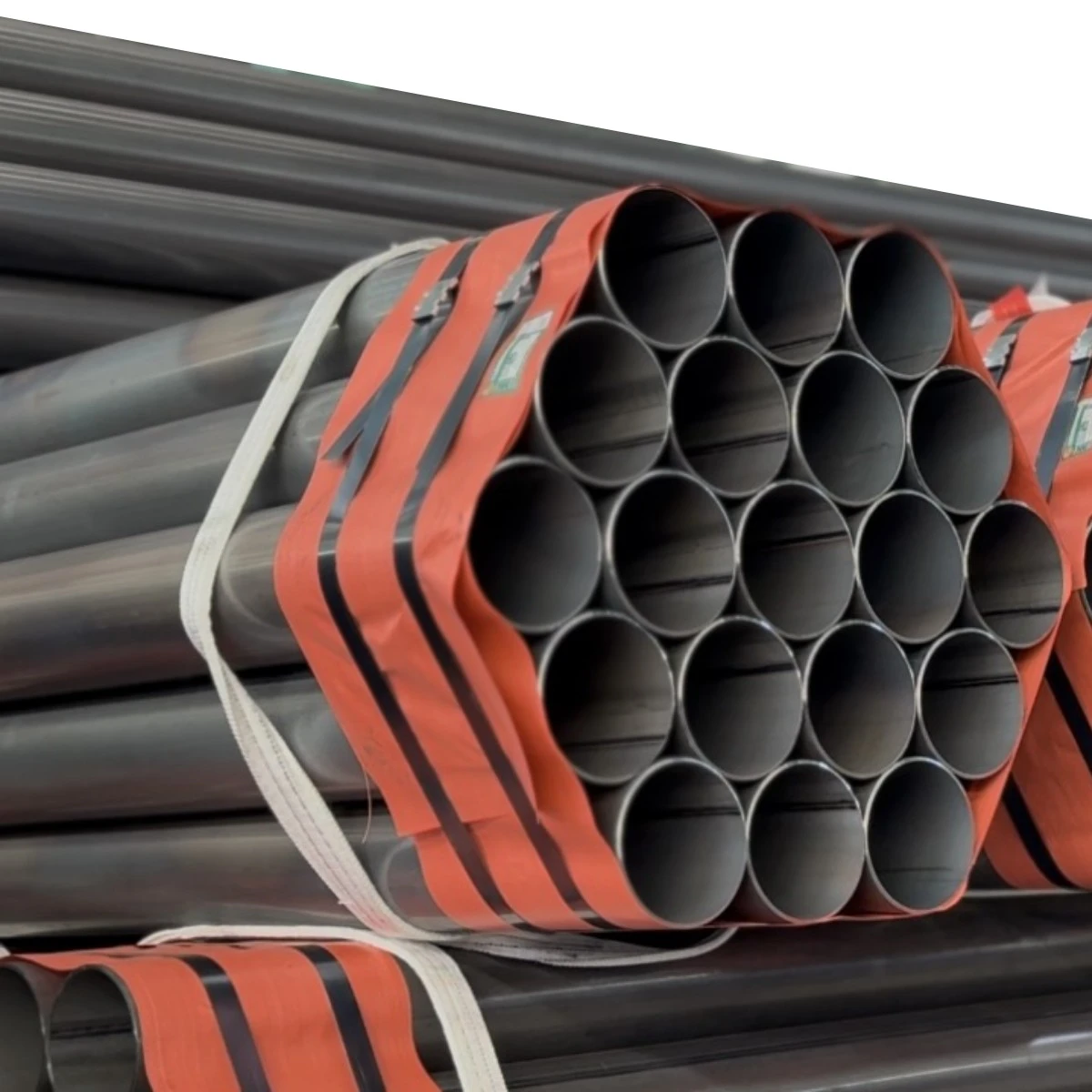
Wrap individually or in bundles: Use waterproof PVC film, anti‑rust paper, or heat‑shrink wrap to seal pipes tightly. Ensure no gaps for moisture entry.
Cap pipe ends: Fit plastic or rubber end caps to block moisture and dirt from entering the pipe interior.
Cover for outdoor temporary storage: If outdoor storage is unavoidable, use waterproof tarpaulins or rain covers. Ensure covers are sloped for drainage and do not touch the pipes directly.
5. Regular Inspection & Maintenance
Schedule checks: Inspect every 2–4 weeks (monthly minimum). In high‑humidity seasons, increase frequency to weekly.
Check key signs: Look for moisture condensation, coating damage, discoloration, or early rust spots (red/brown stains).
Address issues promptly:
Wipe off any moisture immediately and re‑apply anti‑rust oil if needed.
Repair coating damage with touch‑up paint or wax.
Improve ventilation or add dehumidifiers if humidity is too high.


Contact Information: +86 15373142593, +86 18031823787, +86 13472220366 (WeChat available)
WhatsApp: +86 15373142593
Address: No. 10, Dongzhuang Village, Nandian Town, Pingshan County, Shijiazhuang, Hebei Province