
Hebei Jingye Precision Pipe Manufacturing Co., Ltd.
Tel:+8615373142593
+8618031823787
+8618932936052
WhatsApp: +86 15373142593
E-mail :steeltube@hbjyjt.com
Add: No. 10, Dongzhuang Village, Nandian Town, Pingshan County, Shijiazhuang City, Hebei Province
Rusting is a common and troublesome problem for round steel pipes in global steel trade and project applications, directly affecting the service life, performance, and appearance of the pipes. As a widely used hollow steel product in construction, petroleum, automotive, marine, and water conservancy industries, rusted round steel pipes will suffer from reduced strength, poor sealing, and even structural failure—leading to pipeline leakage, equipment damage, project delays, and additional maintenance costs. For global buyers, contractors, warehouse managers, and suppliers, mastering scientific and effective rust prevention methods is crucial to protect the investment value of round steel pipes, ensure project quality, and reduce economic losses.
1. Choose Rust-Resistant Materials: Prevent Rust from the Source
The choice of material is the fundamental measure to prevent round steel pipes from rusting. Different materials have different corrosion resistance, and selecting the right material according to the application environment can effectively reduce the rust risk. This is a key consideration for global buyers in cross-border procurement.
Carbon Steel Round Steel Pipes: Low cost and widely used, but poor corrosion resistance, prone to rust in humid, outdoor, or chemical environments. Suitable for indoor, dry scenarios; if used outdoors, must be matched with strict surface treatment.
Stainless Steel Round Steel Pipes: Made of 304, 316, or 316L stainless steel, with excellent corrosion resistance due to the chromium oxide passivation film on the surface. 304 stainless steel is suitable for general corrosive environments (such as outdoor, water supply), while 316/316L stainless steel is more corrosion-resistant, suitable for marine, chemical, and high-humidity environments (complying with ASTM A213, EN 10216 standards).
Alloy Steel Round Steel Pipes: Adding elements such as chromium, nickel, and molybdenum to carbon steel improves corrosion resistance and strength, suitable for high-pressure, corrosive industrial scenarios (such as petroleum pipelines).
2. Professional Surface Treatment: Form a Protective Barrier
Surface treatment is the most common and effective rust prevention method for round steel pipes, especially for carbon steel pipes. It forms a protective layer on the pipe surface, isolating steel from air, moisture, and corrosive media. Global suppliers usually provide the following surface treatment options:
Hot-Dip Galvanizing: Immerse the round steel pipe in molten zinc (450℃-460℃), forming a dense zinc layer (thickness 80-120μm) on the surface. The zinc layer has strong corrosion resistance, can effectively prevent rust for 15-20 years in outdoor environments, and is widely used in construction scaffolding, water supply pipes, and outdoor supports (complying with ASTM A123, EN 10240 standards).
Electro-Galvanizing: Use electrolysis to deposit a thin zinc layer (10-30μm) on the pipe surface. It has a smooth appearance, suitable for indoor, low-corrosion scenarios (such as furniture, indoor pipelines), but the corrosion resistance is weaker than hot-dip galvanizing.
Painting/Coating: Apply anti-rust paint, epoxy resin, or polyurethane coating on the pipe surface. The coating forms a tight protective film, which can be customized according to the corrosion environment (e.g., anti-corrosion paint for chemical environments, waterproof coating for outdoor use). It is cost-effective and suitable for large-scale projects.
Passivation Treatment: For stainless steel round steel pipes, use chromate or nitric acid to treat the surface, enhancing the stability of the passivation film and improving resistance to pitting corrosion and rust.
3. Scientific Storage: Avoid Rust During Storage
Improper storage is one of the main causes of round steel pipe rust, especially during long-term storage or cross-border transportation. The following measures can effectively prevent rust during storage:
Store in a dry, ventilated warehouse: Keep the warehouse relative humidity below 60%, install ventilation equipment, and place moisture-absorbing materials (such as silica gel, lime) to avoid condensation on the pipe surface.
solate from the ground: Lay wooden boards, rubber pads, or concrete slabs on the warehouse floor to prevent moisture from the ground eroding the pipe surface. Avoid storing pipes in low-lying, waterlogged areas.
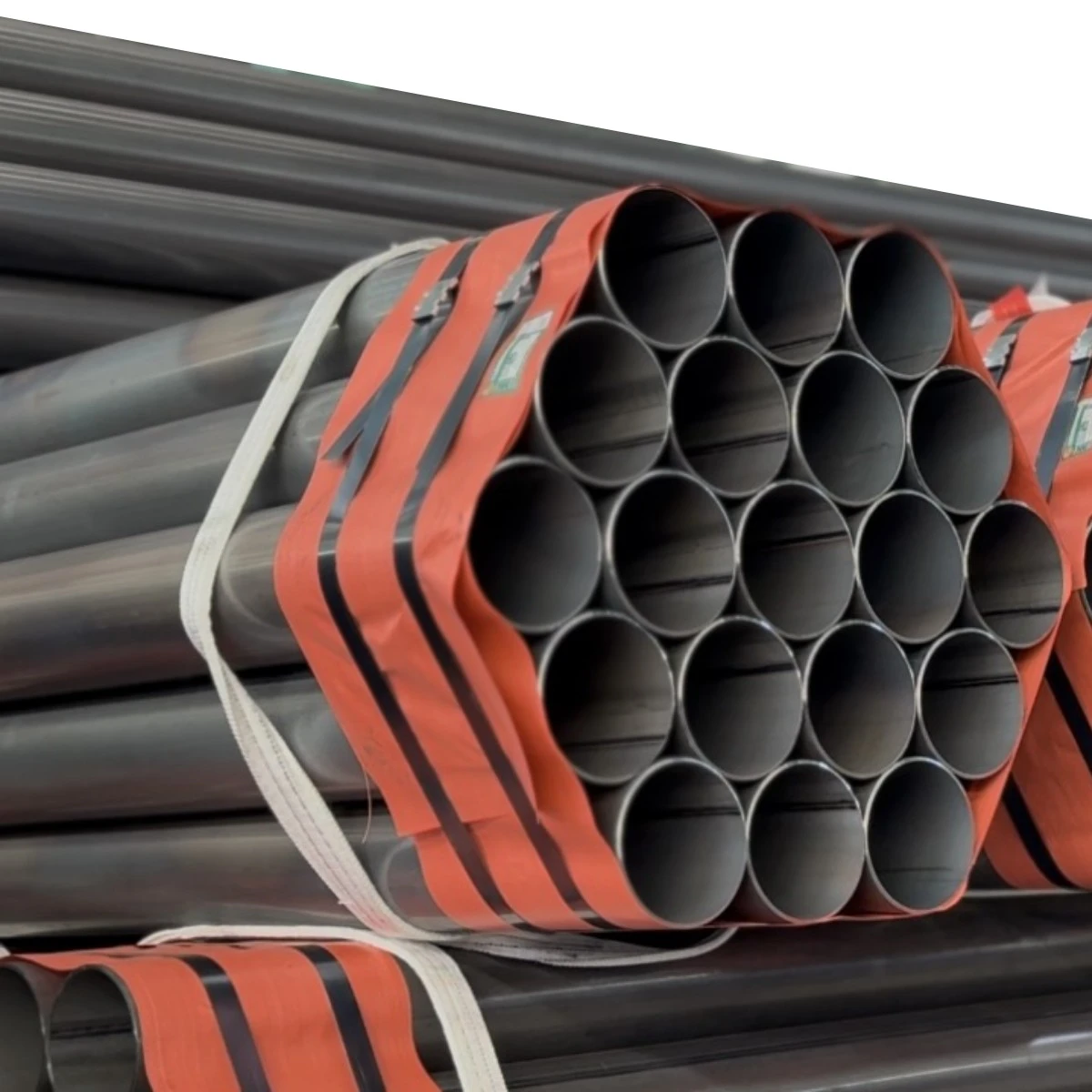
Classified storage: Store round steel pipes of different materials and surface treatments separately to avoid chemical reactions (e.g., contact between carbon steel and stainless steel may cause galvanic corrosion). Wrap the pipe surface with plastic film or waterproof tarpaulin to prevent dust and moisture.
Regular inspection: Inspect the pipes once a week, remove rust spots in time with sandpaper or rust remover, and reapply anti-rust oil or paint if necessary.
4. Standardized Transportation: Prevent Rust During Transit
During cross-border transportation (especially sea transportation), round steel pipes are prone to rust due to humidity, salt spray, and collision. Standardized transportation protection is essential:
Waterproof packaging: Wrap the pipes with waterproof tarpaulin or plastic film, and install protective caps at both ends to prevent seawater, rainwater, and moisture from entering the pipe.
Anti-collision protection: Use foam sleeves or woven cloth to wrap the pipe surface, avoid direct collision between pipes or with the carriage, preventing scratches on the protective layer (scratches will expose the steel substrate and cause rust).
Choose appropriate transportation routes: Avoid transporting through high-humidity, high-salt areas (such as coastal areas) as much as possible; for sea transportation, choose containers with moisture-proof functions.
5. Daily Maintenance: Extend Rust Prevention Period
After installation and use, regular daily maintenance can further extend the rust prevention period of round steel pipes, especially for outdoor and corrosive environments:
Regular cleaning: Clean the pipe surface with a dry cloth or neutral detergent to remove dust, dirt, and corrosive substances (such as salt, acid, alkali), avoiding the accumulation of corrosive media.
Re-maintenance of protective layer: Check the surface coating or zinc layer regularly; if peeling, scratching, or rusting is found, touch up with matching paint or zinc-rich paint in time to restore the protective layer.
Avoid contact with corrosive media: For pipes used in chemical or marine environments, regularly check the surrounding environment, avoid direct contact with acid, alkali, seawater, and other corrosive substances; if necessary, install protective sleeves.
6. Key Tips for Global Buyers and Suppliers
1. Choose materials and surface treatment according to the application environment: For marine, chemical environments, select 316 stainless steel or hot-dip galvanized carbon steel pipes; for indoor dry scenarios, common carbon steel pipes with simple coating are sufficient. 2. Clarify surface treatment requirements in the trade contract: Specify the surface treatment type (hot-dip galvanizing, painting), thickness, and relevant standards (ASTM, EN) to ensure the supplier provides qualified products. 3. Strengthen storage and transportation management: Cooperate with reliable logistics teams, standardize packaging and storage operations, and avoid rust during transit and storage. 4. Conduct regular maintenance: For long-term use of pipes, formulate a maintenance plan to extend service life and reduce replacement costs.
Conclusion
Preventing round steel pipes from rusting requires a combination of material selection, surface treatment, scientific storage, standardized transportation, and daily maintenance. For global users, mastering these strategies can effectively protect the quality of round steel pipes, avoid rust-induced losses, and ensure the smooth progress of projects. By choosing the right materials and surface treatment, and strictly following storage and maintenance standards, round steel pipes can maintain good performance and appearance for a long time, maximizing the investment value and promoting the healthy development of cross-border steel trade.


Contact Information: +86 15373142593, +86 18031823787, +86 13472220366 (WeChat available)
WhatsApp: +86 15373142593
Address: No. 10, Dongzhuang Village, Nandian Town, Pingshan County, Shijiazhuang, Hebei Province