
Hebei Jingye Precision Pipe Manufacturing Co., Ltd.
Tel:+8615373142593
+8618031823787
+8618932936052
WhatsApp: +86 15373142593
E-mail :steeltube@hbjyjt.com
Add: No. 10, Dongzhuang Village, Nandian Town, Pingshan County, Shijiazhuang City, Hebei Province
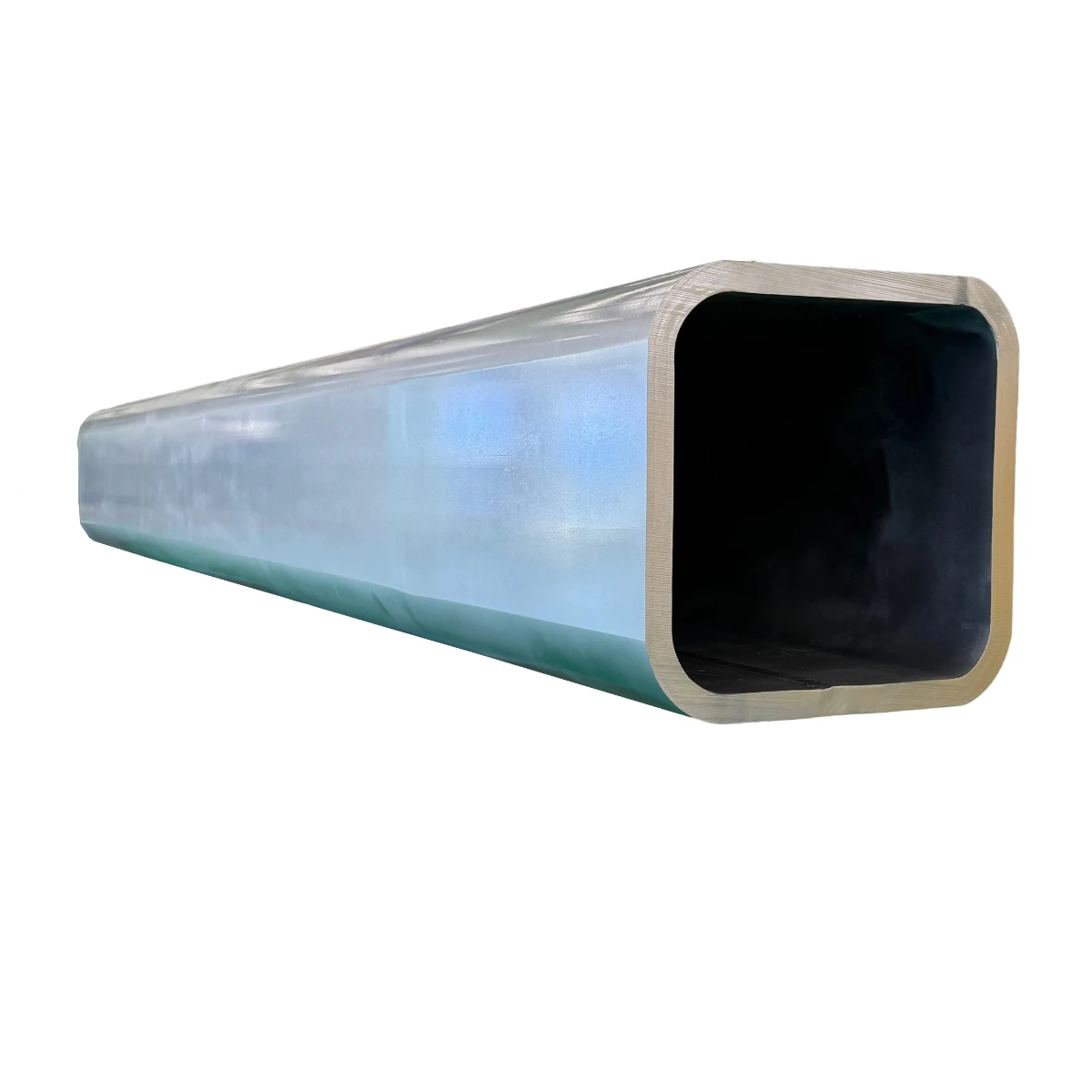
High frequency welded square tubes and seamless square tubes are two mainstream hollow structural steel profiles widely used in construction, mechanical manufacturing, engineering support and fluid pipeline projects. Although both feature square hollow cross-sections and serve structural and load-bearing purposes, they differ greatly in production technology, structural composition, mechanical performance, dimensional accuracy, cost and applicable working conditions. Many purchasers and engineering designers often confuse the two profiles during material selection. This article elaborates on the core differences between high frequency welded square tubes and seamless square tubes from multiple dimensions, helping users select suitable steel tubes for specific projects.
1. Differences in Production Process
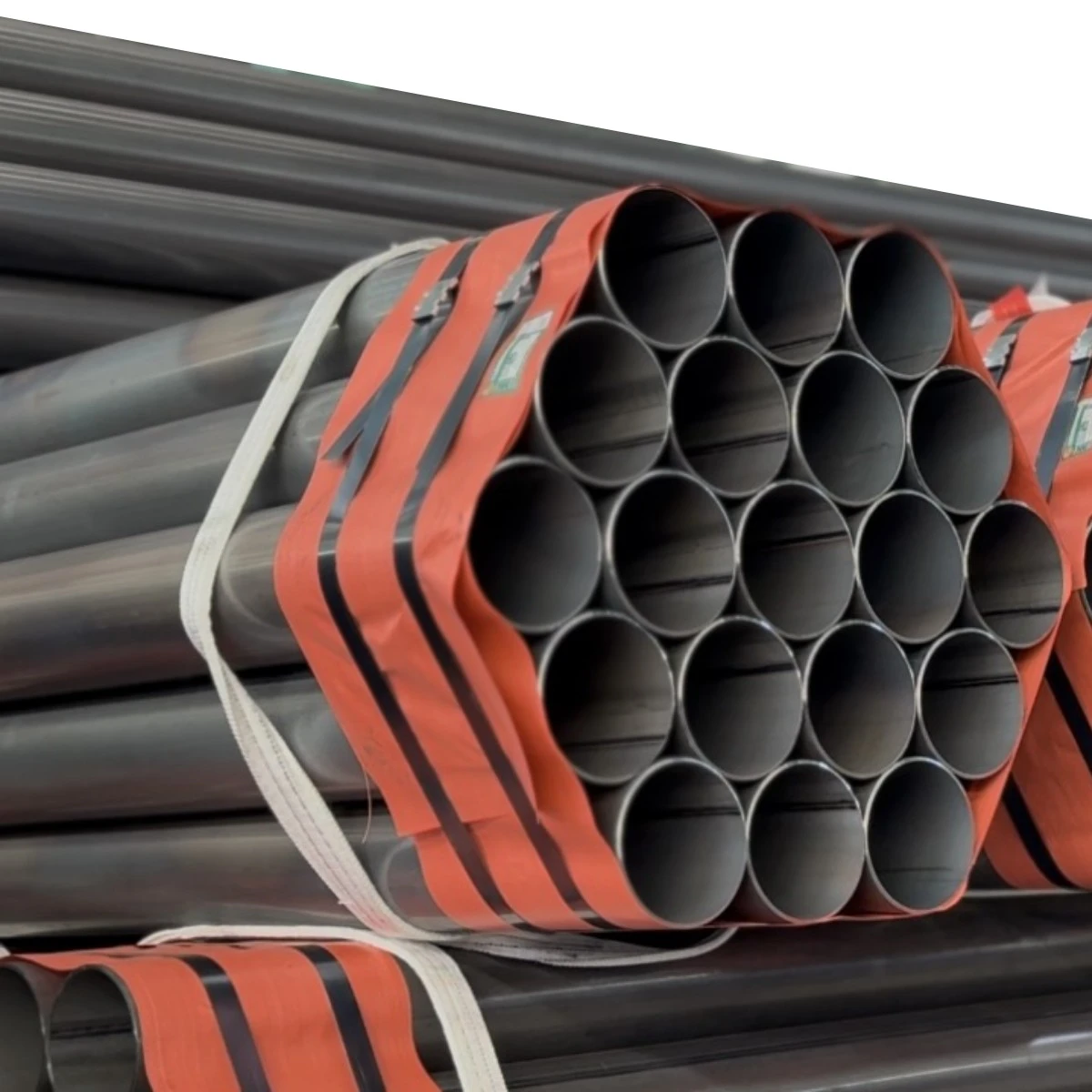
High Frequency Welded Square Tube belongs to the ERW (Electric Resistance Welding) tube series. It takes continuous steel strips as raw materials. After uncoiling, leveling and multi-pass cold bending, the strip is formed into a round tubular blank. High-frequency current is then used to heat the strip edges rapidly for fusion welding. After welding, the tube undergoes sizing, straightening and fixed-length cutting to form standard square sections. The whole process is continuous rolling and welding forming with high production efficiency and short processing cycles.
Seamless Square Tube is processed based on seamless round steel tubes. It adopts hot piercing, rolling and cold drawing processes to produce hollow seamless round tubes, which are then extruded and shaped through professional square molds. There is no welding procedure in the whole production process, and no weld seam exists on the tube body. The production procedure is more complex with lower single-line output.
2. Structural and Visual Differences
The most intuitive distinction lies in the existence of weld seams. High frequency welded square tubes have a uniform and fine weld seam on the tube wall after welding and finishing. Modern high-frequency welding and internal burr removal technology can make the weld seam almost invisible on the surface, yet the welded joint structure still exists at the microscopic level.
Seamless square tubes have no any weld seam or joint on the entire tube wall. The overall steel structure is integrated and continuous with uniform wall thickness and compact metallographic structure, without structural weak points caused by welding.
3. Mechanical Performance and Bearing Capacity Differences
High frequency welded square tubes feature balanced structural strength and good toughness. The high-frequency fusion weld has stable bonding strength, which can meet the load-bearing, bending and torsion requirements of conventional structural engineering. However, affected by the welding heat-affected zone, the local mechanical uniformity is slightly weaker than that of seamless tubes, and the performance is limited in ultra-high pressure and alternating fatigue load scenarios.
Seamless square tubes have integrated metal structure with consistent wall strength. They present excellent pressure resistance, impact resistance and fatigue resistance. With no weld weak zones, they maintain stable performance under high pressure, high temperature, strong impact and long-term alternating loads, and are not prone to structural cracking or local failure.
4. Dimensional Accuracy and Surface Quality
High frequency welded square tubes are formed by continuous rolling with precise sizing control. They offer high outer dimension accuracy, good straightness and uniform flat tube surface. The wall thickness tolerance is stable, which is suitable for projects requiring high assembly accuracy and standardized installation.
Seamless square tubes are affected by hot rolling and cold drawing deformation rules. Their dimensional tolerance and surface flatness are slightly lower than high-frequency welded tubes. For small-specification and high-precision square tubes, the overall consistency of welded products performs better.
5. Cost and Specification Flexibility
High frequency welded square tubes support diversified specifications and customized sizes. The production cycle is short, raw material utilization rate is high, and the comprehensive manufacturing cost is relatively low. They are cost-effective for large-batch conventional structural projects.
Seamless square tubes have complex production processes, high equipment and processing costs, and long delivery cycles. The unit price is higher than welded tubes of the same specification. Their cost advantage is not obvious in conventional low and medium-load scenarios.
6. Applicable Working Scenarios
Application of High Frequency Welded Square Tubes
They are widely used in conventional structural fields with medium and low load requirements. Typical scenarios include building steel structures, factory workshop frames, guardrail supports, mechanical equipment shells, general engineering brackets, and conventional low-pressure fluid delivery pipelines. They are suitable for large-volume, cost-controlled and standardized construction projects.
Application of Seamless Square Tubes
They are mainly applied in high-standard working conditions requiring high safety and stability. Typical scenarios include high-pressure fluid pipelines, hydraulic support equipment, power engineering facilities, pressure vessel accessories, aerospace auxiliary structures, and mechanical parts bearing long-term alternating fatigue loads.
Summary
The core differences between high frequency welded square tubes and seamless square tubes stem from molding processes and structural integrity. High frequency welded square tubes are characterized by high production efficiency, precise dimensions and favorable cost performance, ideal for conventional structural support and general engineering scenarios. Seamless square tubes feature integrated seamless structure, superior mechanical stability and high pressure resistance, which are more suitable for high-pressure, high-load and high-safety industrial scenarios. In actual engineering selection, users can combine project load requirements, precision standards and budget conditions to choose matching square tube products, so as to balance service performance and economic benefits.


Contact Information: +86 15373142593, +86 18031823787, +86 13472220366 (WeChat available)
WhatsApp: +86 15373142593
Address: No. 10, Dongzhuang Village, Nandian Town, Pingshan County, Shijiazhuang, Hebei Province